
As the weather cools down in Northern Colorado, it’s natural to want your home to feel a little warmer and more inviting. But creating that cozy fall feeling doesn’t have to mean covering every surface with pumpkins, orange leaves, and seasonal signs.
In fact, some of the most comfortable spaces don’t look “fall-themed” at all.
To make your home feel cozy for fall without seasonal décor, focus on five lasting design elements: warm colors, natural materials, inviting textures, layered lighting, and finishes that add visual warmth. These choices can make a home feel comfortable in September and October while still looking beautiful in February, April, or July.
At Eheart Interior Solutions, that’s the kind of seasonal design we love: creating a feeling rather than decorating around a theme..
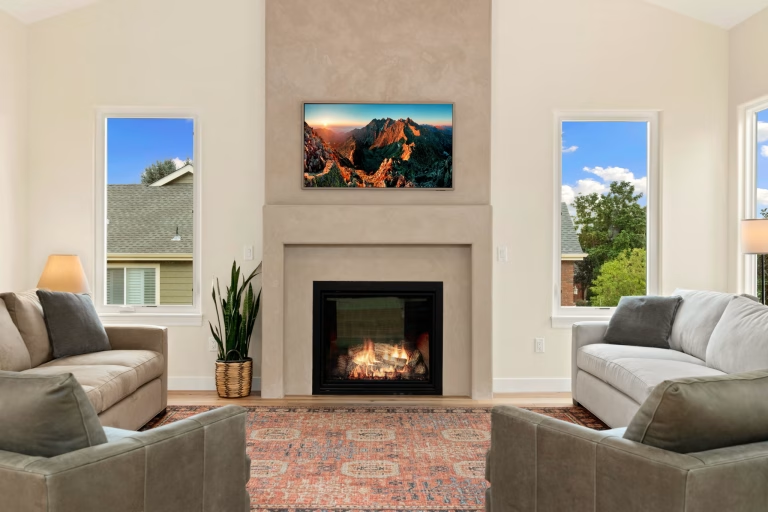
- Start With Warm, Livable Colors
One of the easiest ways to make a room feel warmer is to look at its overall color palette.
That doesn’t necessarily mean painting your walls brown or beige. Warm neutrals can include creamy whites, soft taupes, muted greens, mushroom tones, greiges, and earthy shades that have just enough warmth to keep a room from feeling stark.
Sherwin-Williams’ guide to warm neutral paint colors describes warm neutrals as an inviting alternative to cooler colors and notes that shades such as beige, taupe, and soft sage can create a cozy backdrop that still works with a variety of decorating styles.
Benjamin Moore’s neutral color guide makes a similar distinction, noting that neutrals with yellow, red, or orange undertones generally create a warmer, more inviting atmosphere, while cooler undertones tend to feel airier.
The important part is undertone.
Two rooms can both technically be “white,” for example, while one feels warm and comfortable and the other feels much cooler and more contemporary.
And remember: color never exists by itself. Flooring, cabinetry, countertops, natural light, artificial lighting, and surrounding finishes can all change the way a paint color reads.
That’s why we prefer looking at materials together rather than choosing each finish in isolation.
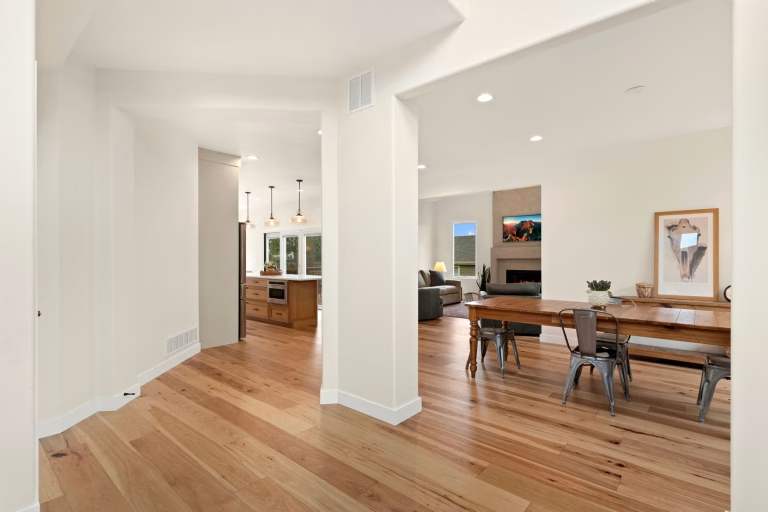
- Let Your Flooring Add Warmth From the Ground Up
Flooring covers one of the largest visual areas in a room, so it has a tremendous influence on how that room feels.
For a warmer look, consider materials and finishes with some natural variation and depth.
Warm-toned hardwood is an obvious example, but it isn’t the only option. Luxury vinyl plank can bring in realistic wood tones while offering durability and easy maintenance. Carpet can introduce softness and texture in bedrooms, family rooms, and basements. Even tile can feel warmer when you move away from icy grays and toward limestone-inspired, earthy, or softly mottled finishes.
The goal isn’t necessarily to choose a “brown floor.”
Instead, look for flooring that works with the undertones already present in your home.
A slightly warm floor paired with creamy walls, natural wood cabinetry, and soft textiles can create the cozy feeling people often associate with fall—without adding a single seasonal decoration.
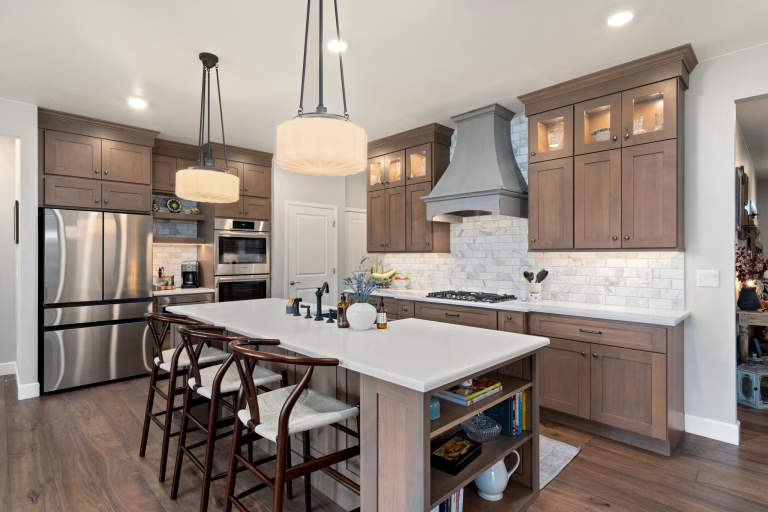
- Bring in Natural Wood and Organic Materials
There’s a reason natural materials work so well in comfortable interiors.
Wood grain, stone, woven textures, and other organic surfaces introduce subtle variation that keeps a room from feeling flat or overly polished.
And this look isn’t limited to rustic homes.
In the National Kitchen & Bath Association’s 2026 Kitchen Trends Report, 59% of surveyed kitchen-industry professionals identified wood-grain cabinetry as growing in popularity, while white oak was the most popular wood type among respondents. The same survey also found strong interest in organic and natural design.
That doesn’t mean everyone suddenly needs a white-oak kitchen.
It does reinforce something we see often in design: natural materials can add warmth without making a space feel heavily decorated.
You might accomplish that with:
- Wood cabinetry or a wood island
- Natural-looking flooring
- A stone or stone-inspired countertop
- Woven window treatments
- Linen or textured upholstery
- Ceramic or handmade-looking tile
These elements provide visual interest while allowing the room itself to remain calm.
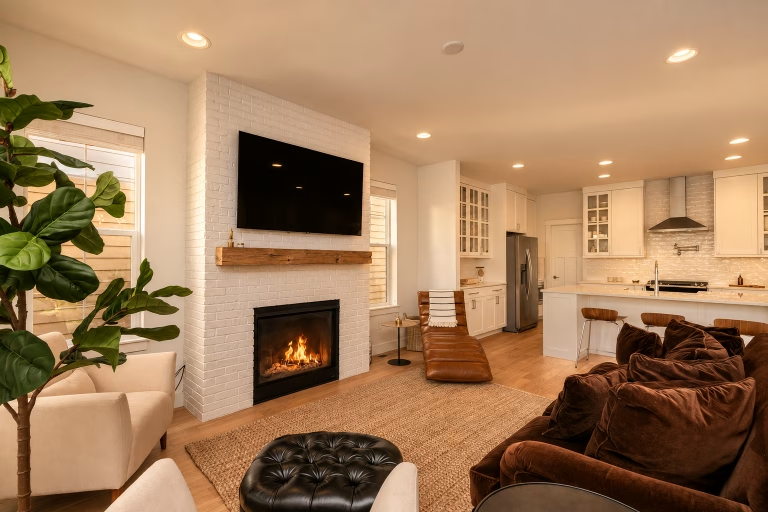
- Add Texture Instead of More Stuff
When people want a room to feel cozier, their first instinct is often to add more décor.
Sometimes the better answer is to add more texture.
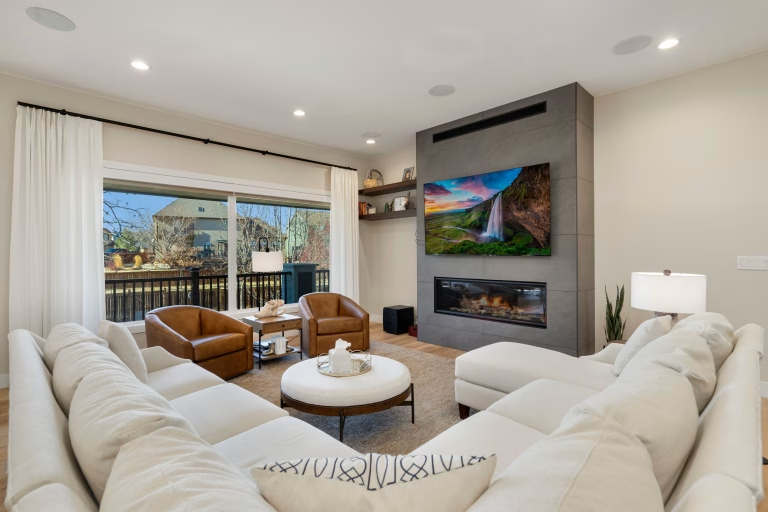
Think about the difference between a room filled entirely with smooth surfaces and one that combines wood grain, upholstery, woven fabrics, rugs, natural stone, and soft window treatments.
The second room can feel much more layered even if it actually contains fewer objects.
That means you can create a fall feeling without putting seasonal items everywhere.
Try adding a textured area rug over hardwood, swapping lightweight pillows for fabrics with a little more dimension, introducing an upholstered chair, or choosing window treatments that soften a room.
The result feels warmer because the materials themselves create depth.
And when spring arrives, you don’t have to redesign the entire room.
- Pay Attention to Lighting as the Days Get Shorter
Lighting becomes especially noticeable as we move into fall and spend more time indoors during the evening.
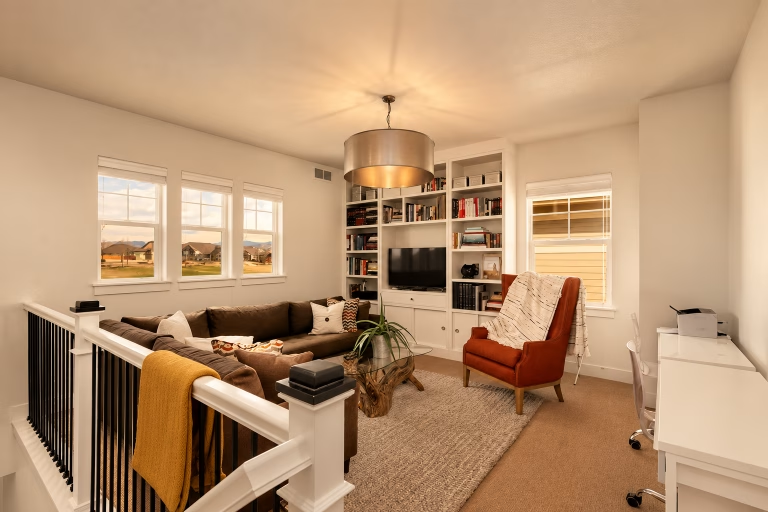
One overhead fixture usually isn’t enough to create a comfortable room.
Instead, think in layers:
Ambient lighting provides general illumination.
Task lighting helps with activities like cooking, reading, or working.
Accent lighting adds depth and highlights architectural features, artwork, cabinetry, or other focal points.
Lighting is particularly important in kitchens. In NKBA’s 2026 survey of 634 kitchen-industry professionals, 95% identified natural lighting, 93% quality lighting, and 92% task lighting as important kitchen design considerations.
Under-cabinet lighting, pendants, lamps, sconces, and dimmers can all help create a room that adapts throughout the day.
During a bright Colorado afternoon, you may barely notice those layers.
At 7 p.m. in October, you definitely will.
- Think “Cozy” Rather Than “Fall”
This may be our favorite distinction.
Instead of asking:
“How can I decorate my house for fall?”
Try asking:
“What would make this room feel more comfortable?”
Maybe it’s warmer flooring.
Maybe the stark white walls need a softer undertone.
Maybe a kitchen full of painted surfaces would benefit from some natural wood.
Maybe the room needs an area rug.
Or maybe the design itself is fine, but the lighting needs improvement.
Those changes create the atmosphere people are often trying to achieve with seasonal decorating—but they continue working long after the season is over.
A Cozy Home Doesn’t Have to Look Seasonal
We love fall inspiration.
We just don’t think your house needs to look like a fall display to feel warm, comfortable, and welcoming.
Warm neutrals, natural materials, thoughtful flooring, texture, and layered lighting can create a home that feels especially inviting when the temperatures drop—but still makes sense throughout the rest of the year.
And when those pieces are selected together, the result feels intentional rather than trendy.
At Eheart Interior Solutions, we help homeowners coordinate flooring, cabinetry, countertops, tile, color, and other interior finishes so they work together as one complete design.
Because sometimes the best way to make your home feel more like fall is simply to make it feel more like home.
Frequently Asked Questions
What colors make a home feel cozy?
Warm neutrals such as creamy whites, taupes, warm greiges, muted greens, mushroom tones, and earthy shades can make a room feel more inviting. The exact color should be chosen in relation to your flooring, cabinetry, lighting, and other finishes.
Do I have to use dark colors to make a room feel cozy?
No. Light colors can feel very warm when they have the right undertones. A creamy white or warm beige can create a bright room that still feels comfortable rather than cold.
What flooring makes a home feel warmer?
Hardwood and wood-look flooring with natural or warm undertones can add visual warmth, while carpet provides physical softness and texture. The best choice depends on the room, lifestyle, moisture exposure, maintenance requirements, and the other finishes in the home.
How can I make my home feel like fall without decorating for fall?
Focus on permanent or semi-permanent elements such as warm colors, natural wood, textured fabrics, area rugs, comfortable flooring, layered lighting, and organic materials. These create the warmth associated with fall without relying on seasonal décor.