
Thinking about staying in your home as you get older? Aging in place isn’t necessarily about major renovations or accessibility equipment. It’s about understanding whether the home you love will continue to work for the life you want to live.
There’s something wonderful about a home you’ve lived in for years. You know which floorboard creaks, where the afternoon sunshine lands, and exactly how to navigate the kitchen without turning on a light.
It’s familiar. It’s comfortable. It’s yours.
So when someone brings up the idea of aging in place, your first thought might be, “Well, of course I want to stay in my home!”
But what does that actually mean? Does it involve remodeling the whole house? Should you be thinking about it even if retirement is years away? And how do you know whether your current home is the right one for the long haul?
Let’s talk about what aging in place really involves, without jumping straight into renovation plans.
What Is Aging in Place?
Aging in place means continuing to live in your own home as you grow older while maintaining as much independence, comfort, and safety as possible. It may involve adapting your home, arranging assistance with everyday activities, or simply planning ahead so your living environment continues to meet your needs.
According to the National Institute on Aging, aging in place involves more than the physical home. It also includes access to transportation, healthcare, household assistance, and support from family or community services.
In other words, aging in place doesn’t mean you have to do everything yourself. It means having the ability to continue living in a familiar environment with the support that’s right for you.
And it’s something a lot of people are thinking about.
According to AARP’s 2024 Home and Community Preferences Survey, 75% of adults age 50 and older want to remain in their current homes as they age. Interestingly, the same research found that 44% expect they may eventually need to move.
That’s a pretty significant gap between what people want and what they believe will be possible.
And it’s exactly why understanding aging in place matters.
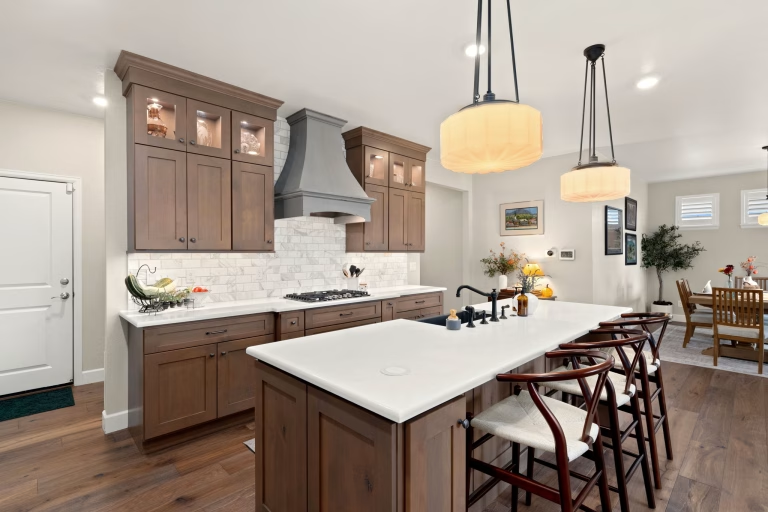
Does Aging in Place Mean You Need to Remodel Your Home?
No. Aging in place doesn’t automatically require remodeling. Whether changes are needed depends on your home’s layout, your current abilities, and how easily the space can accommodate changing needs.
This is one of the biggest misconceptions about the whole idea.
When people hear “aging in place,” they sometimes picture a major renovation that makes their home look more like a medical facility.
That’s not necessarily what we’re talking about.
For some homeowners, their existing layout already works beautifully. Others may discover that certain aspects of their home could eventually become inconvenient or difficult to navigate.
Take a primary bedroom on the second floor. Right now, going upstairs might be nothing more than part of your daily routine. But what happens if you have knee surgery? Or reach a point where stairs aren’t quite as appealing as they once were?
That doesn’t automatically mean it’s time to relocate your bedroom.
It simply means you’ve identified something worth thinking about.
The National Institute on Aging’s guidance on home safety emphasizes evaluating your living environment as your needs change, rather than assuming every home requires the same alterations.
The goal isn’t to prepare your home for every possible scenario. It’s to understand how well your home can adapt as your needs change.
Sometimes the answer is that very little needs to change at all.
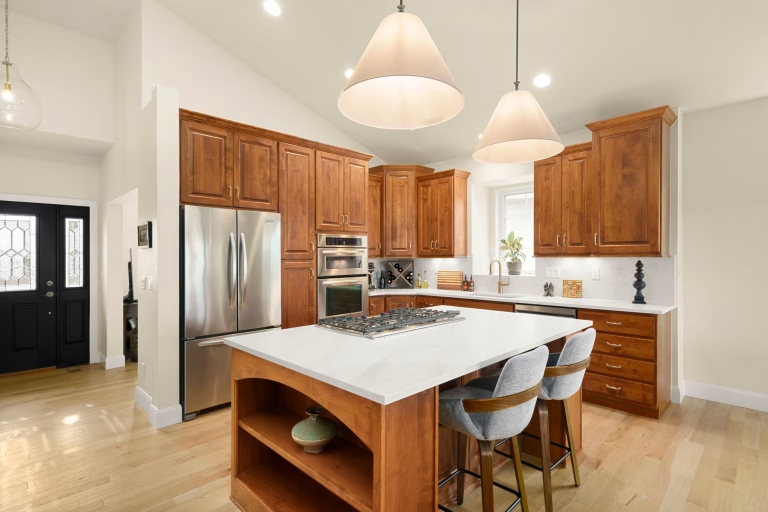
When Should You Start Thinking About Aging in Place?
The best time to consider aging in place is before your home becomes difficult to navigate or maintain. There is no specific age when planning needs to begin, and you don’t need to be retired or experiencing mobility challenges to think about your home’s future.
In fact, many of the most useful conversations happen when homeowners are already considering a renovation.
Maybe you’re finally ready to update that 1990s bathroom. Perhaps you’re rethinking your kitchen layout, replacing worn flooring, or planning to make your current house your forever home.
Those are natural opportunities to ask whether the decisions you’re making today will still serve you 10 or 20 years down the road.
We often encourage homeowners to think about how they actually use their space before focusing on materials and finishes. It’s an important part of understanding what to expect from a home remodel.
After all, a beautiful kitchen isn’t especially helpful if the layout makes everyday activities unnecessarily difficult.
And the same goes for any room in the house.
Planning ahead also means you can make decisions at your own pace, based on what you want, rather than making them quickly because circumstances suddenly require it.
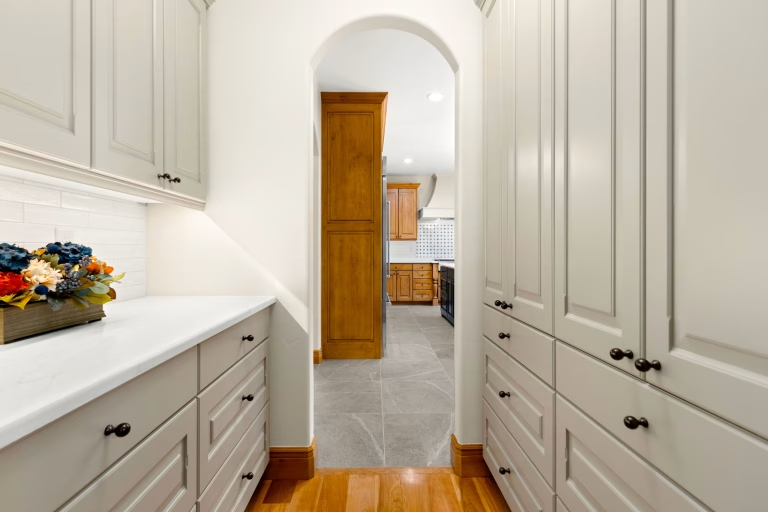
How Do You Know Whether Your Home Is Suitable for Aging in Place?
A home that’s suitable for aging in place is one that can continue to support your daily routines safely and comfortably as your needs change. Its layout, accessibility, maintenance requirements, location, and potential for future adaptation all play a role.
Here’s where things get a little more personal.
A home with narrow hallways, multiple changes in floor elevation, and all essential living spaces upstairs may present different challenges than a home with a more open, single-level layout.
But the physical layout is only part of the equation.
Consider how much work your home requires. Are you comfortable maintaining the yard, keeping up with repairs, and managing everything that comes with homeownership?
What about the location? Are your doctors, grocery stores, friends, and family reasonably accessible?
The AARP Home and Community Preferences research emphasizes that access to transportation, healthcare, and community services plays an important role in people’s ability to remain in their homes as they age.
Living independently doesn’t just mean being able to move around your house. It also means being able to enjoy your life outside of it.
And here’s the part that matters most: A home doesn’t have to be perfect for aging in place to be a good candidate. It simply needs to be realistic for your circumstances.
What If You Don’t Know What Your Future Needs Will Be?
You don’t need to predict every future health or mobility change to plan for aging in place. The practical approach is to understand your home’s limitations, recognize where flexibility exists, and revisit your plans as circumstances change.
Nobody has a crystal ball.
And frankly, trying to anticipate every possible health concern would be exhausting.
What if you plan for something you never need? What if you overlook something important? What if you invest in remodeling and your circumstances change anyway?
Those are reasonable concerns.
Rather than trying to design a home around every possible future situation, it makes more sense to understand which aspects of your home are relatively easy to adapt and which could become significant obstacles.
This is also why it’s valuable to ask the right questions before beginning any major renovation. In our article, Thinking About Remodeling? 10 Questions to Ask Before You Start, we discuss the importance of understanding your goals before making design decisions.
And remember, your needs at 65 may look very different from your needs at 85.
Aging in place isn’t a one-time decision. It’s something that can evolve along with you.
Is Aging in Place About Safety or Independence?
Aging in place is about both safety and independence, but it’s also about maintaining dignity, personal choice, and quality of life. A home needs to support everyday activities without making its occupants feel restricted or uncomfortable.
Nobody wants to feel as though their home has become an obstacle course.
Being able to move comfortably through familiar rooms, prepare meals, use the bathroom, and enjoy everyday routines is something most of us take for granted.
Until it becomes difficult.
According to the Centers for Disease Control and Prevention, more than one in four adults age 65 and older experiences a fall each year. That’s an important reason to consider how a home’s environment may affect everyday safety.
But safety is only part of the picture.
A home should still feel welcoming, comfortable, and personal. It should reflect your tastes, not simply accommodate your physical needs.
Take the bathroom, for example.
It’s one of the rooms we use most frequently, yet it’s also a space where poor layout, awkward storage, and inadequate lighting can make daily routines more frustrating than they need to be.
We explored that idea in our article, What Actually Makes a Bathroom Work Better?, which looks at how thoughtful design improves the everyday experience of using a space.
And that’s really the point.
A home that supports independence should also be a home you genuinely enjoy living in.
Is Aging in Place More Affordable Than Moving?
Aging in place can be less expensive than moving, but it isn’t always. The total cost depends on home maintenance, remodeling needs, property expenses, potential in-home assistance, and the cost of alternative housing.
This is where the conversation gets especially practical.
It’s tempting to assume that staying in your current home will always be the more affordable option. After all, you might have a low mortgage payment or own your home outright.
But houses require maintenance, and those expenses don’t disappear when you retire.
Neither do property taxes, utilities, or insurance.
Add potential remodeling expenses or assistance with daily activities, and the financial picture becomes more complicated.
In fact, AARP’s research on housing preferences found that among adults age 50 and older who anticipate needing to move, 60% cited a desire to reduce housing and maintenance costs.
That’s a reminder that staying in your home isn’t always the least expensive option.
On the other hand, moving has its own costs. There may be real estate fees, moving expenses, different property taxes, or higher monthly housing payments.
And let’s not forget the emotional value of staying somewhere you love. That’s a little harder to enter into a spreadsheet.
For homeowners considering changes to their existing property, understanding remodeling costs is an important part of the decision. Eheart also offers information about financing a remodeling project, which may be useful when evaluating the financial side of a renovation.
The practical takeaway? Aging in place should be part of a larger financial conversation, not simply a remodeling budget.
It’s worth understanding both what staying could cost and what your alternatives might look like.
What If Your Home Isn’t a Good Fit for Aging in Place?
If your home cannot reasonably accommodate your future needs, downsizing or moving may be a better choice than remodeling. The right decision depends on your personal priorities, finances, health, and desired lifestyle.
Here’s something that doesn’t get said often enough: Sometimes moving really is the better decision.
And that’s okay.
Maybe your home has three flights of stairs, sits on a steep lot, or requires more maintenance than you want to manage.
Maybe the people and activities you want to be close to are somewhere else.
Or maybe you’ve reached a point when you’d rather spend your weekends enjoying Northern Colorado than taking care of a large house.
The National Institute on Aging acknowledges that there may come a time when remaining in a particular home is no longer comfortable or practical. That decision is personal, and it deserves careful consideration.
Aging in place isn’t a competition to see who can stay in their original home the longest.
It’s about choosing a living situation that supports the life you want.
For some people, that means adapting their existing home. For others, it means moving into a smaller, easier-to-maintain property.
The right answer is the one that makes sense for you.
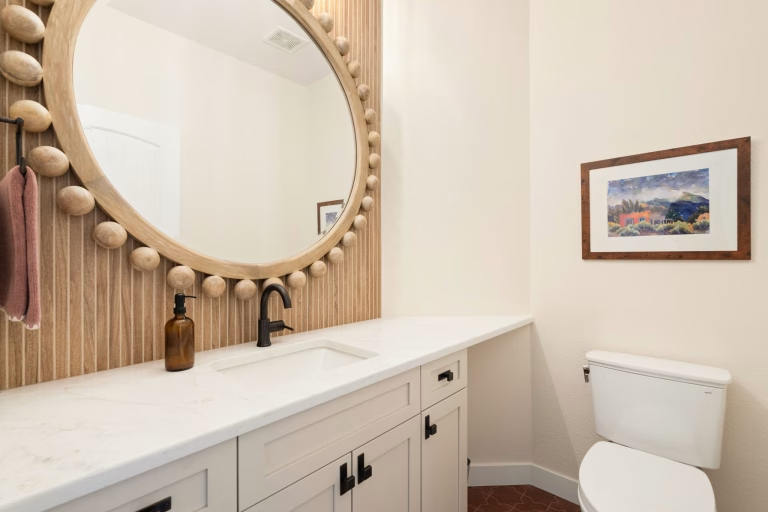
Can an Aging-in-Place Home Still Be Beautiful?
Absolutely. A home designed for aging in place can be just as beautiful, comfortable, and personal as any other thoughtfully designed home. Practical features and attractive design aren’t mutually exclusive.
In fact, many of the design qualities people appreciate at every stage of life also contribute to a home that functions well over time.
Thoughtful layouts, comfortable movement between spaces, good lighting, durable materials, and easy-to-use features make everyday life better regardless of your age.
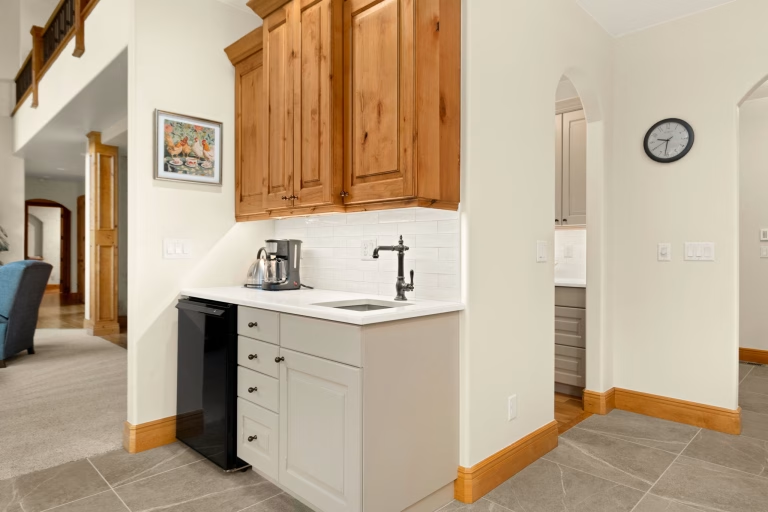
And there’s no reason a home designed with the future in mind can’t have beautiful cabinetry, gorgeous flooring, carefully selected finishes, and all the personal details that make it yours.
Even something as seemingly simple as selecting flooring for your home involves balancing appearance with practical considerations such as durability, maintenance, and how the material fits your lifestyle.
At Eheart Interior Solutions, we believe good design should work for the people living in the space—not just on the day a project is completed, but for years afterward.
Frequently Asked Questions About Aging in Place
Is aging in place only for seniors?
No. Although aging in place generally refers to remaining in your home as you grow older, homeowners of any age can benefit from considering their long-term needs. Planning is especially relevant when making significant remodeling decisions.
Does aging in place mean living without assistance?
No. Aging in place can include help from family members, caregivers, healthcare professionals, and community services. The National Institute on Aging outlines several types of in-home assistance, including personal care, household help, transportation, and healthcare services.
Do you need a single-story house to age in place?
Not necessarily. A single-story home may make daily activities easier for someone with mobility limitations, but multistory homes can also be suitable depending on their layout, the homeowner’s needs, and their potential for adaptation.
Does Medicare pay for aging-in-place remodeling?
Generally, Original Medicare does not pay for routine home remodeling or accessibility renovations. Some medically necessary equipment and qualifying home healthcare services may be covered, but the eligibility requirements are specific.
Homeowners should review Medicare’s coverage and exclusions and their individual benefits before assuming any home-related expense will be reimbursed.
Is it better to remodel your existing home or move?
Neither option is universally better. Remodeling may make sense when you love your home and the necessary changes are practical and affordable. Moving may be preferable when the house requires extensive alterations, is costly to maintain, or no longer fits your lifestyle.
A Home That Works for Today—and Tomorrow
So, where does all of this leave you?
Perhaps with one simple question:
“Do I see myself living in this home for the next 10, 15, or 20 years?”
If the answer is yes, it’s worth understanding whether your home can comfortably support that goal.
And if you’re not sure? That’s a perfectly reasonable place to start, too.
You don’t need every answer. You don’t need a complete renovation plan. And you certainly don’t need to turn your home upside down just because you’re thinking about the future.
You simply need to understand your options.
At Eheart Interior Solutions, we believe some of the best remodeling decisions begin with a conversation, not a construction plan.
Whether you’re considering a kitchen update, bathroom remodel, flooring replacement, or a broader change to your home’s layout, understanding how you want to live in your space is just as important as deciding how it should look.
We work with homeowners throughout Fort Collins and Northern Colorado to create homes that are beautiful, practical, and thoughtfully designed around real life.
Because in the end, aging in place isn’t really about getting older.
It’s about making sure the home you love continues to feel like home.
Explore Eheart’s home remodeling services and discover how thoughtful design can help make your home work better for the years ahead.